beach coverup
How to Wear a Kimono Cover-Up: Easy Resort Layering That Looks Polished
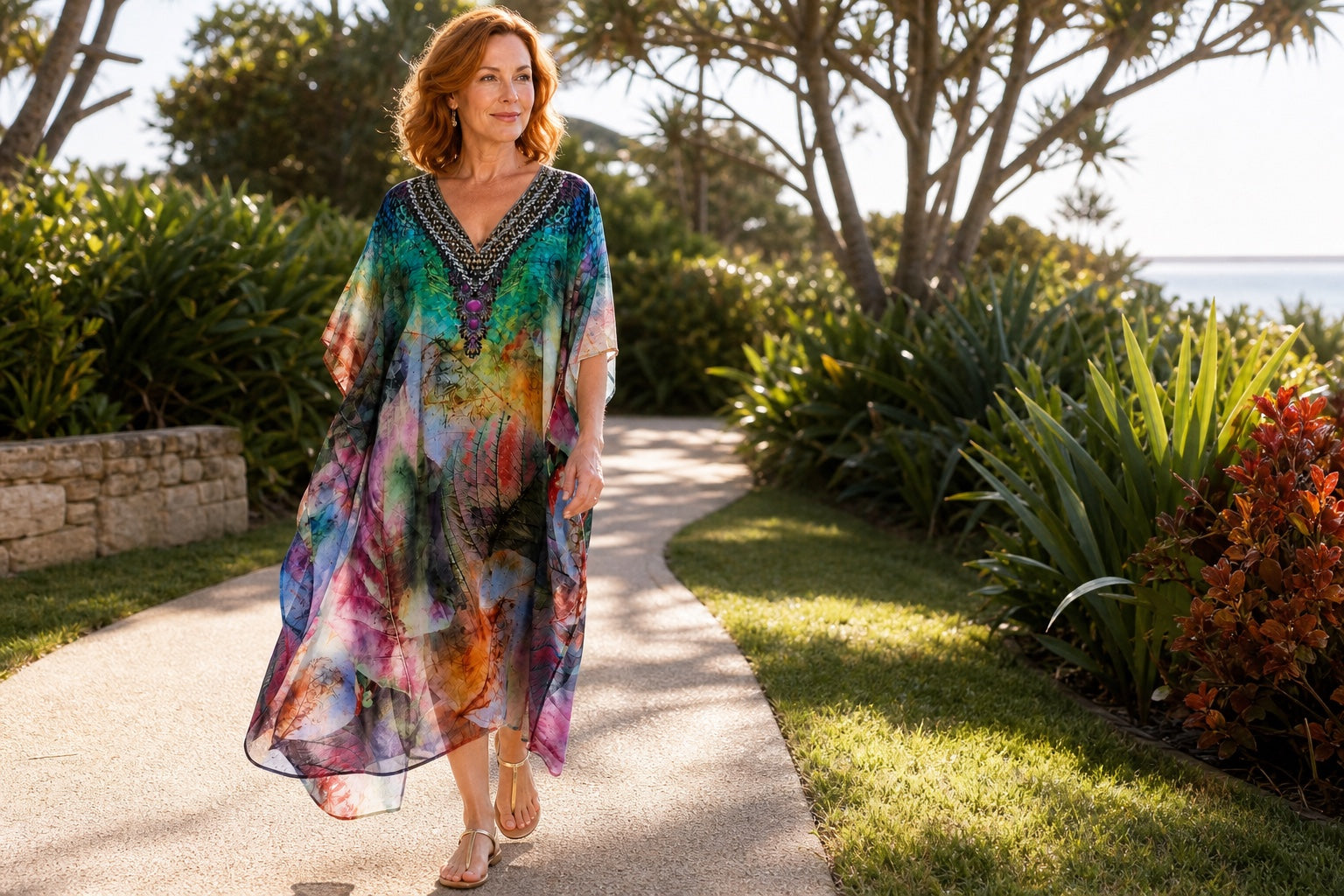
A kimono cover-up is one of the simplest ways to turn a basic warm-weather outfit into something considered. The open front creates long vertical lines, the sleeves add comfortable coverage and a printed fabric introduces colour without the weight of a jacket.

A kimono cover-up is one of the simplest ways to turn a basic warm-weather outfit into something considered. The open front creates long vertical lines, the sleeves add comfortable coverage and a printed fabric introduces colour without the weight of a jacket.
The secret is to keep the outfit underneath clear and let the kimono move. When every layer is loose, patterned or heavily accessorised, the effect can become busy. A calm base gives the cover-up space to do its job.
Begin with the right foundation
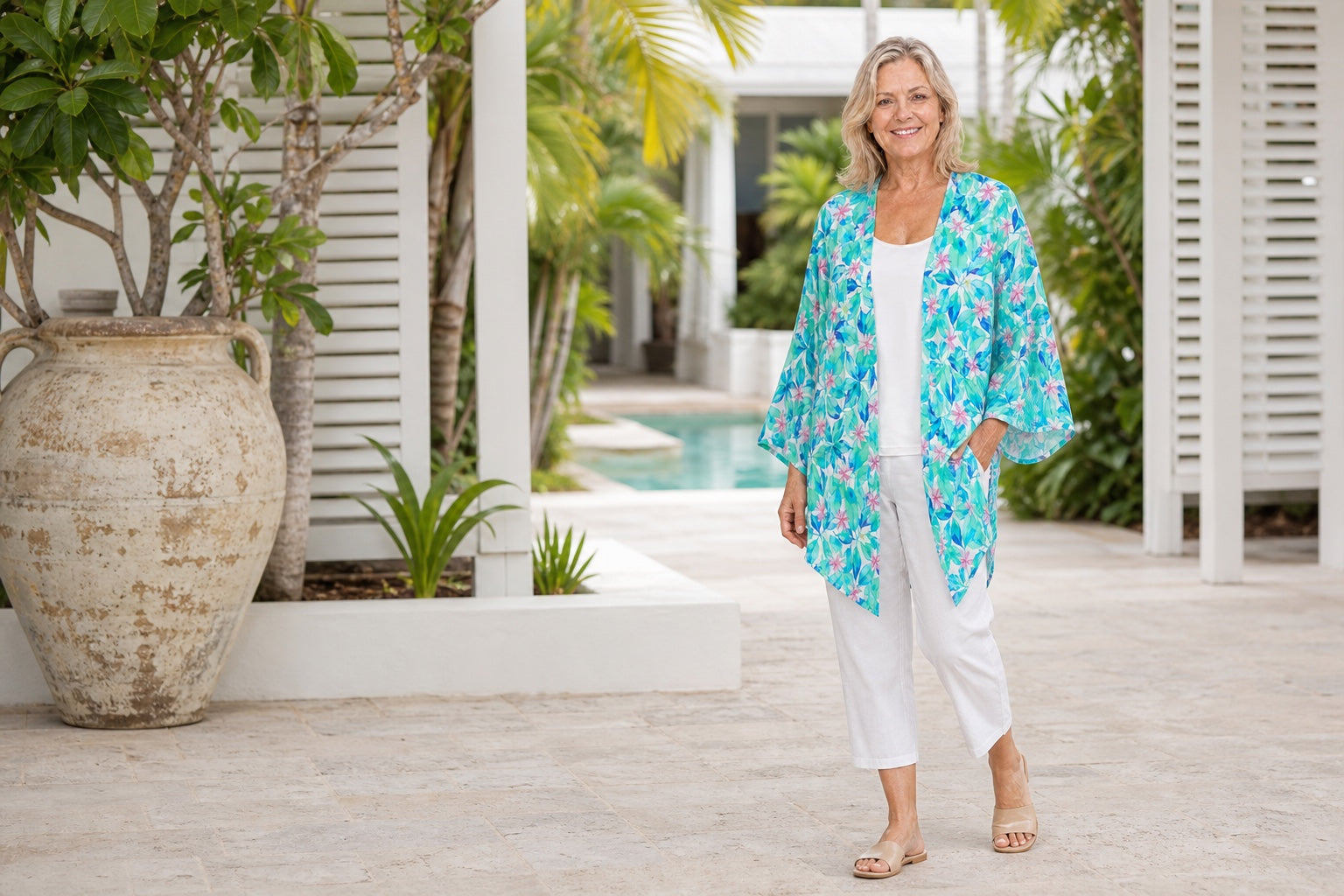
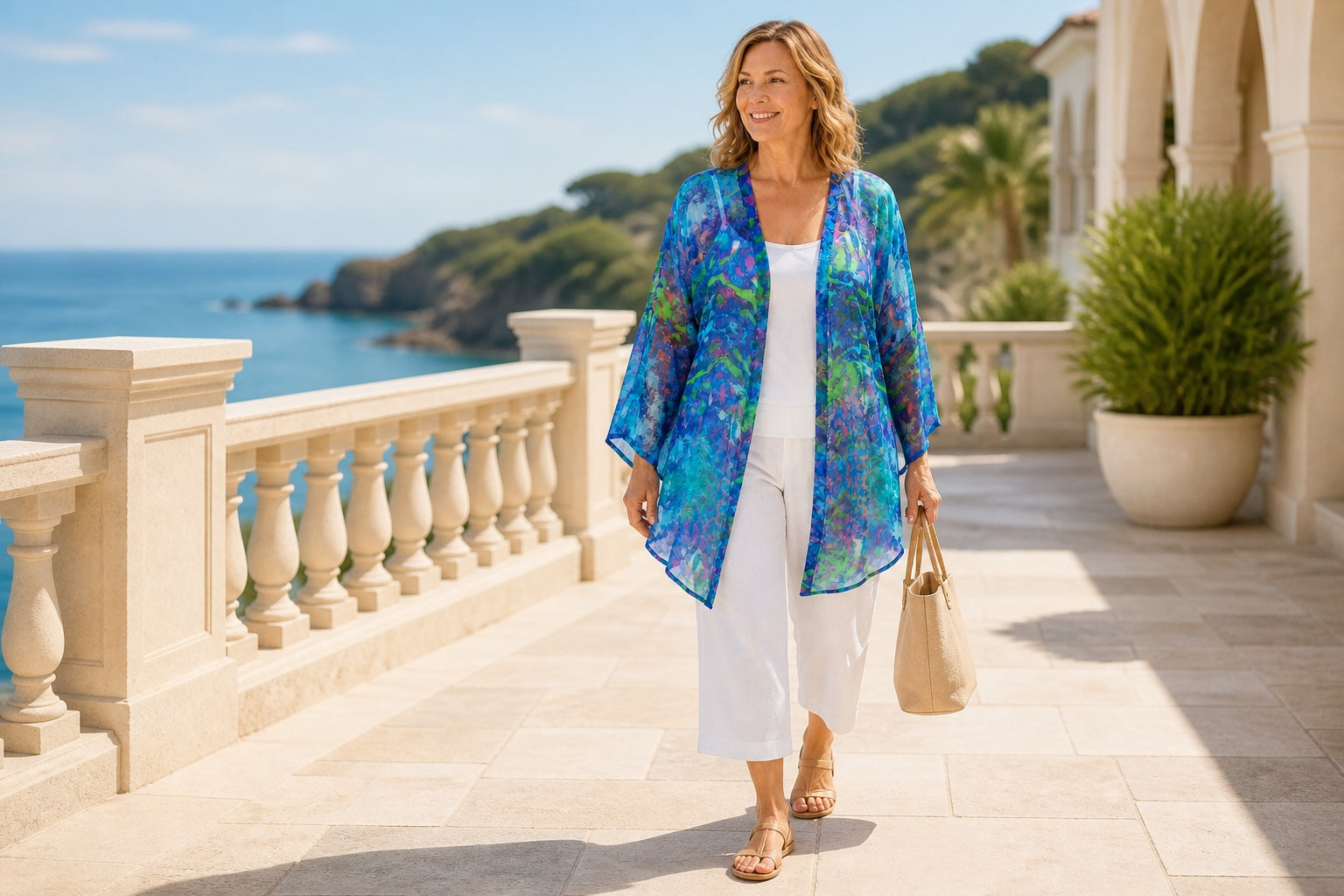
A white camisole and white pants create a fresh resort base; navy or black makes brighter prints feel more evening-ready. A simple column of one colour also makes the open front visually lengthening. Choose a top with a neckline that sits comfortably beneath the kimono rather than competing with it.
Over swimwear, check that the kimono length and transparency give the coverage you expect. Over a dress, choose a clean, narrow shape so the two hems do not fight each other.
Choose chiffon or modal for the effect you want
A chiffon kimono is sheer, airy and especially suited to pools, beaches and hot conditions. Its transparency allows the base layer to remain visible and gives the print a light, floating quality.
A modal kimono is less transparent and has a softer, more fluid drape. It can feel more substantial for lunch, sightseeing or air-conditioned spaces while still remaining lightweight. The cut may be similar, but the fabric changes the mood.
Use proportion to keep the outfit balanced
The relaxed sleeve and body of a kimono pair well with a straighter base. Slim, tapered or softly wide-leg pants can all work when the top underneath is simple. If the kimono has a broad rounded hem, let that shape remain visible rather than adding a long untucked layer beneath it.
Petite wearers can look for an open neckline and a hem that finishes above the widest part of the lower leg. Taller wearers should check sleeve and body measurements so the garment retains its intended sweep.
Move from day to evening with small changes
For daytime, add flat sandals, a tote and minimal jewellery. For dinner, keep the same base but choose a dressier shoe, a smaller bag and an earring that echoes one colour in the print. There is rarely a need for a belt; the open front and flowing hem are part of the design.
On holiday, this approach reduces packing. One printed kimono can create several outfits from the same neutral pants and camisole, and it can also serve as a light layer when indoor air-conditioning feels cool.
Keep the styling effortless
Avoid forcing the fabric into tight knots or repeatedly adjusting the front. Let the kimono sit naturally from the shoulders and check the full outfit from the side and back. The most polished version often looks as though very little effort was required.
Explore all Claire Powell kimonos, or compare the two materials in the guide to modal versus chiffon cover-ups.
Related reading: how to wash and store a chiffon kimono and how to wash and care for modal clothing.