Chiffon
Best Fabrics for Hot and Humid Weather: Modal, Cotton, Chiffon and Silk Compared
A clear comparison of modal, cotton, chiffon and silk for hot, humid weather, including breathability, coverage, drape and care.

Hot and humid weather changes what feels comfortable. Fabric weight, weave, fit and how quickly moisture can move away from the body all matter. No single fibre is best for every situation, so it helps to understand what modal, cotton, chiffon and silk each contribute.
Modal: soft drape and comfortable coverage
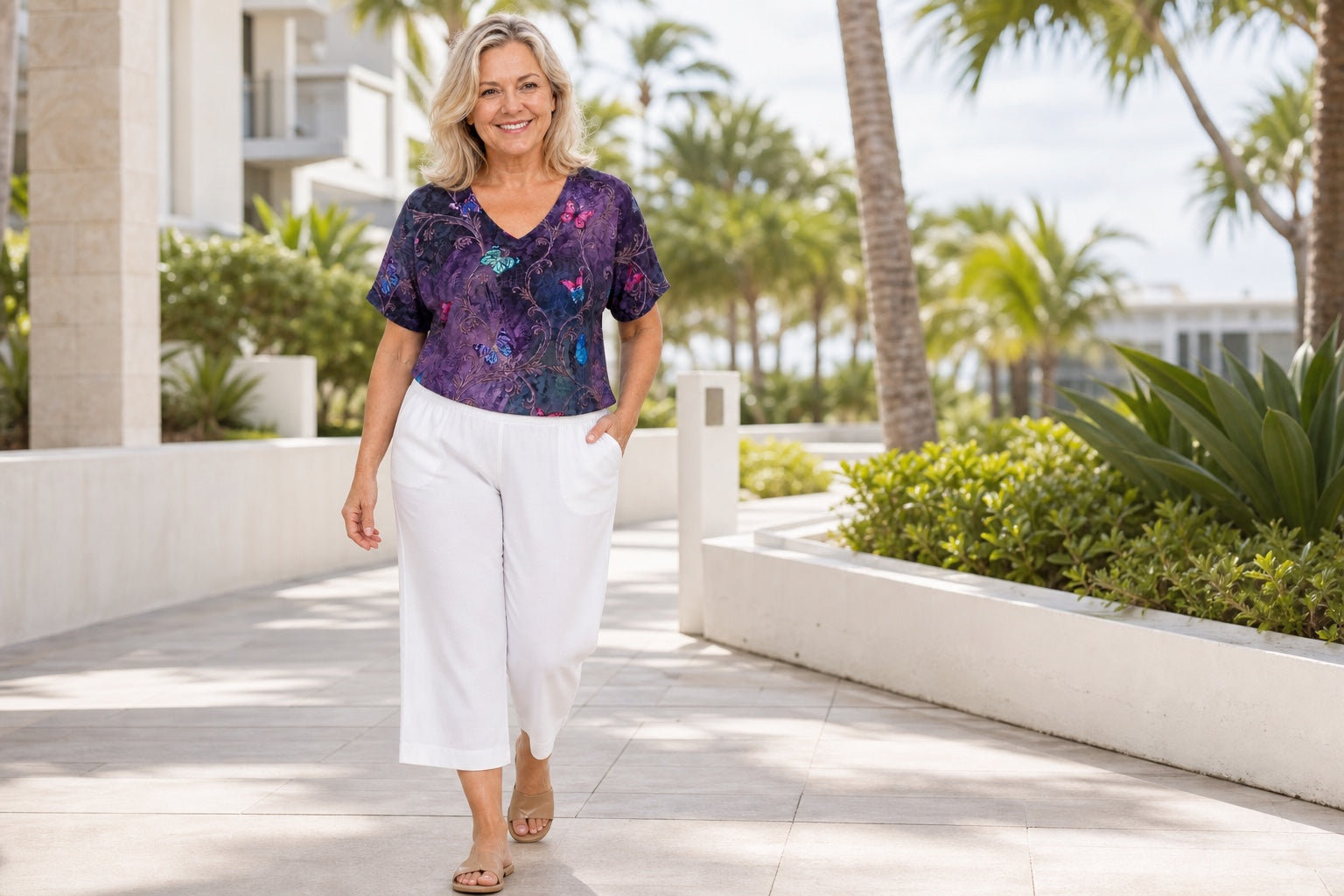
Modal is a regenerated cellulose fibre known for softness and fluid drape. In a loose garment it can feel cool against the skin and provides more coverage than a sheer chiffon layer. It is a useful choice for relaxed tops and kimonos that move between outdoor heat and air-conditioned spaces.
Modal needs gentle care to preserve its shape and colour. Read how to wash modal clothing before the first clean.
Cotton: familiar, breathable and versatile
Cotton can feel breathable and comfortable, although performance depends on the fabric construction. A light cotton voile or soft jersey behaves differently from thick denim. Loose cuts allow air to circulate and are often more comfortable than close-fitting heavy cotton.
For dresses, compare cotton with linen in the guide to summer dress fabrics for hot Australian days.
Chiffon: an airy layer with transparency
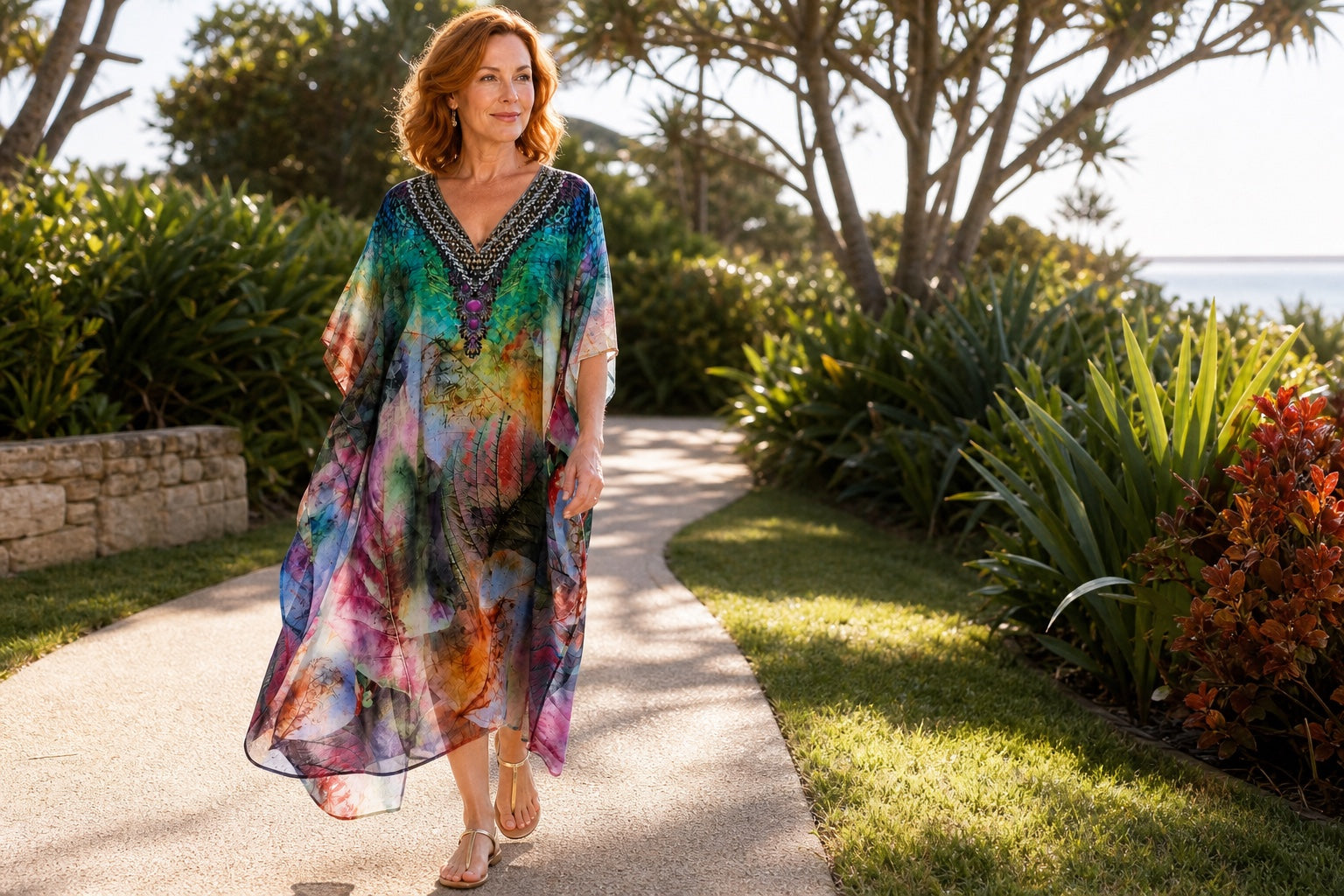
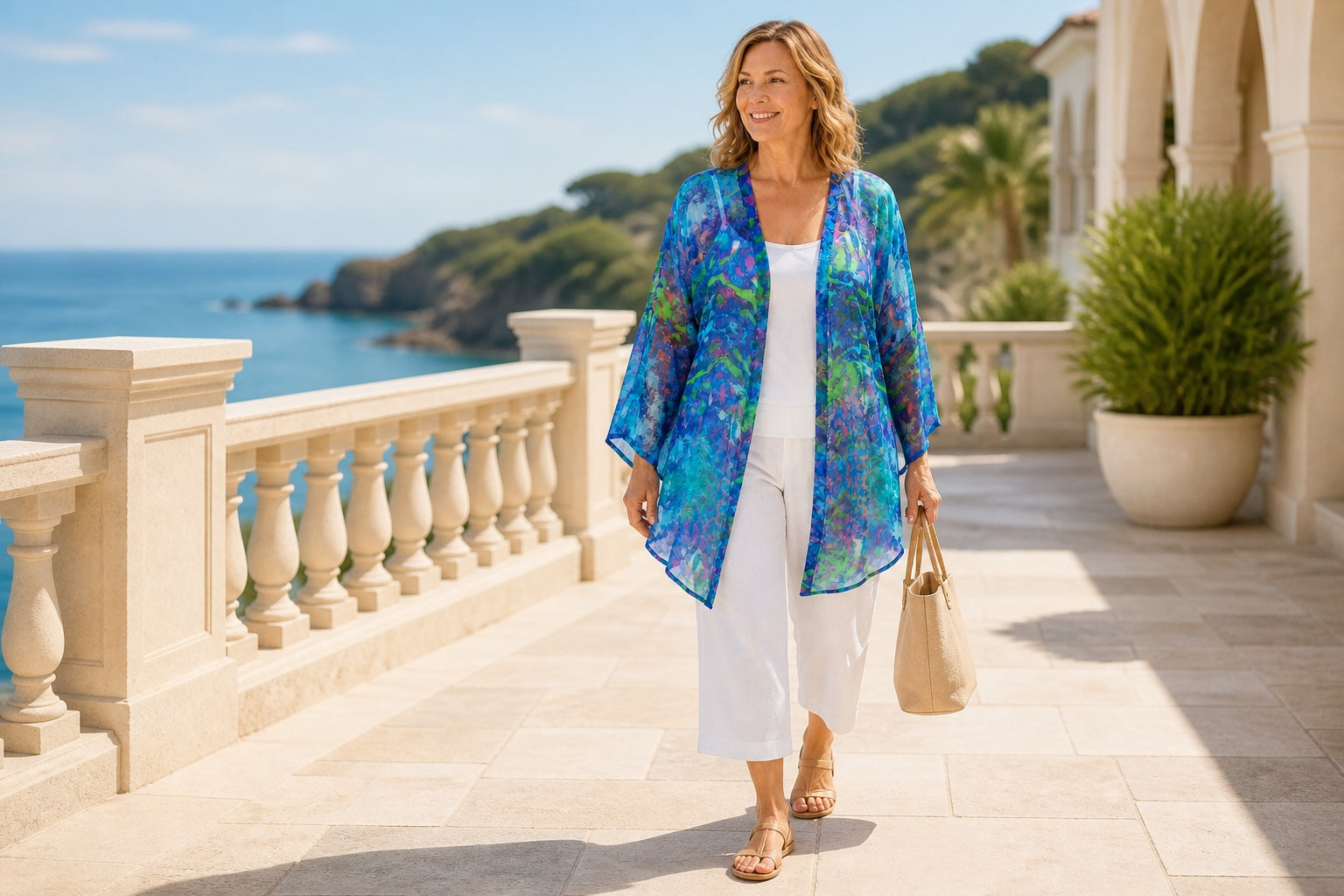
Chiffon is valued for lightness and movement. It is ideal as a cover-up over swimwear or a camisole and pants, but its open, sheer character means it is a layer rather than a substitute for an opaque garment. The floaty drape creates coverage without visual heaviness.
Because chiffon can snag, keep it away from rough jewellery and textured bag straps. See how to wash and store a chiffon kimono.
Silk: light, elegant and temperature responsive
Silk can feel light and comfortable, but it needs protection from perspiration, sunscreen and harsh washing. A silk scarf adds colour without the bulk of a jacket and can be moved or removed easily as the temperature changes.
For travel, consider size and drape as well as fibre. A long scarf can work as a wrap, while a smaller square is useful at the neckline or on a bag.
Fit and construction matter as much as fibre
A breathable fibre can still feel hot in a dense, tight garment. Look for room through the body, an open neckline and sleeves that do not grip. Consider transparency, sun protection and the need for an underlayer.
Choose the fabric for the job: modal for soft coverage, cotton for everyday versatility, chiffon for an airy layer and silk for refined, lightweight colour. Explore Claire Powell's modal kimonos and chiffon kimonos to compare the two cover-up fabrics directly.
More kaftan advice: Continue with what to wear under a kaftan and how to wash and care for a modal kaftan dress.