beach cover-up
Modal vs. Chiffon: Which Kimono Cover-Up Fabric Is Right for You?
Modal and chiffon kimonos can share the same flowing cut yet feel completely different when worn. Chiffon is sheer and airy; modal is softer, more fluid and gives greater coverage. Choosing between them is less about which fabric is “better” and more about where, when and how you want to wear the garment.

Modal and chiffon kimonos can share the same flowing cut yet feel completely different when worn. Chiffon is sheer and airy; modal is softer, more fluid and gives greater coverage. Choosing between them is less about which fabric is “better” and more about where, when and how you want to wear the garment.
Both can add colour and movement to a simple outfit. The practical difference lies in transparency, drape, hand feel and the kinds of layers that sit comfortably underneath.
Chiffon: light, transparent and made for layering
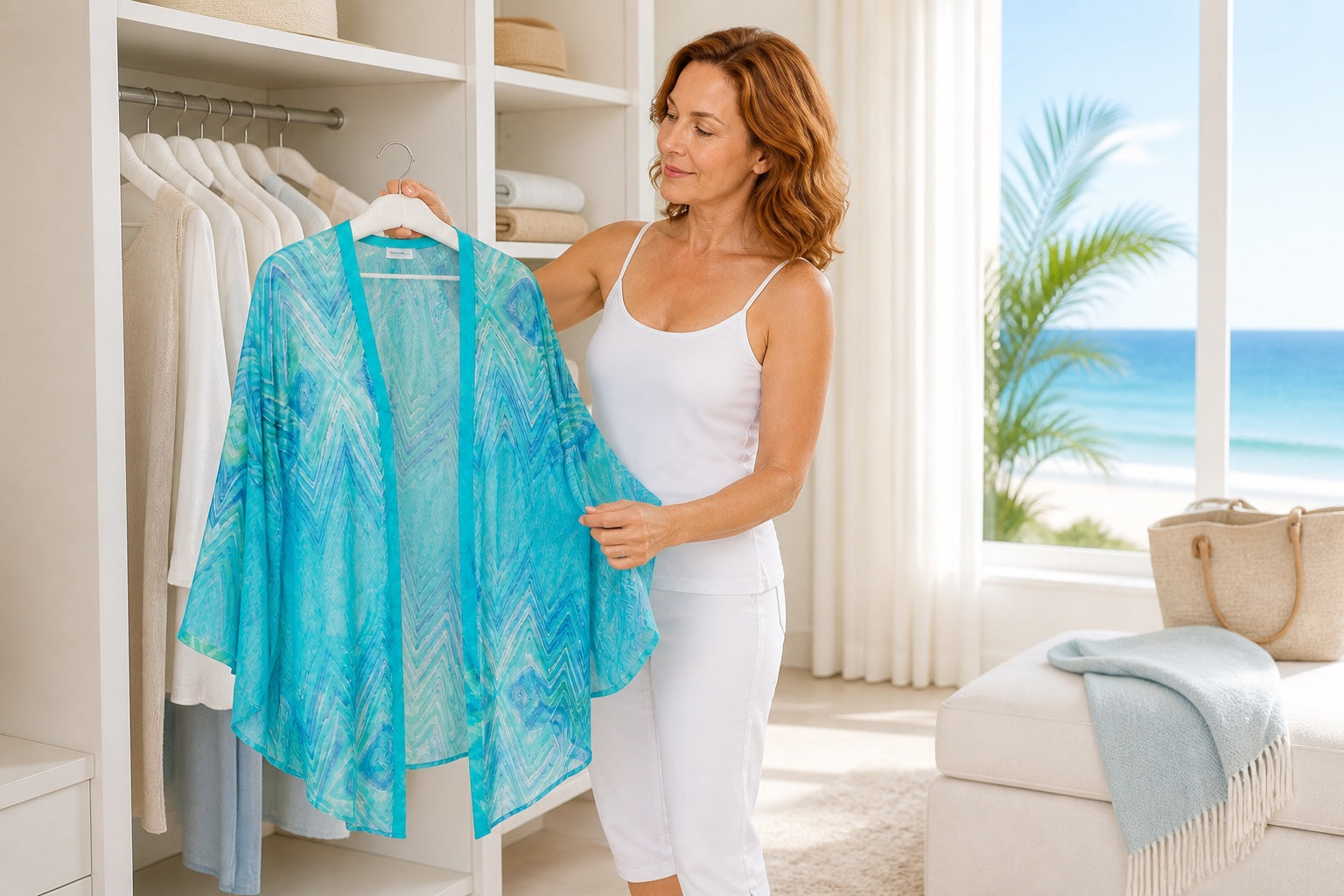
A chiffon kimono lets the camisole, dress or swimwear underneath remain visible. The fabric floats away from the body and catches movement, which makes it especially effective around pools, at beach resorts and in hot weather.
Because it is sheer, the underlayer needs to be chosen deliberately. A white or navy base can change the way the printed colours read. Chiffon is also delicate, so rough jewellery, bag hardware and textured surfaces need a little care.
Modal: soft drape with more coverage
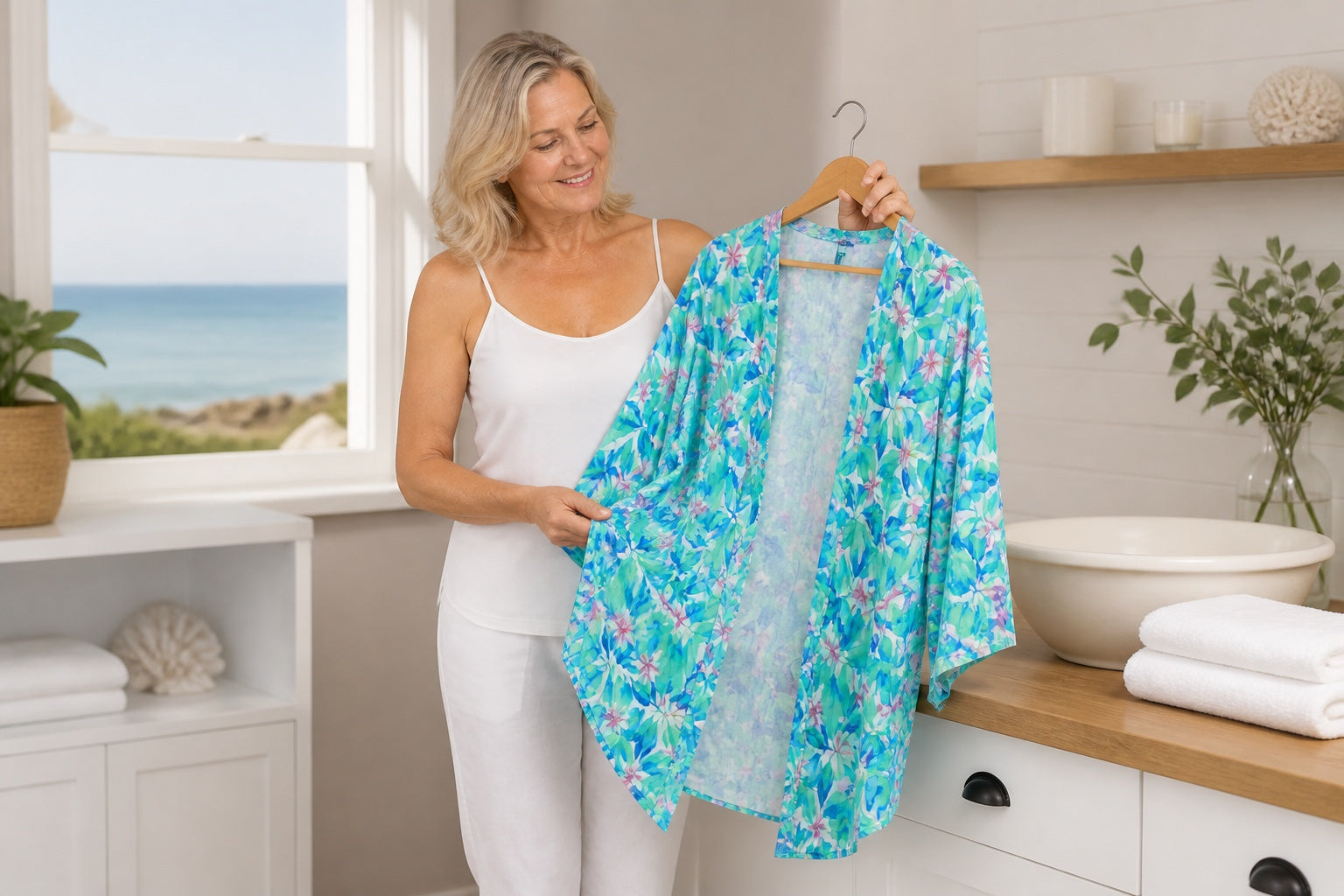
A modal kimono has a smoother, less transparent appearance. It falls in fluid folds and can feel more like a light outer layer than a poolside cover-up. That makes it useful for lunches, travel, air-conditioned spaces and everyday outfits.
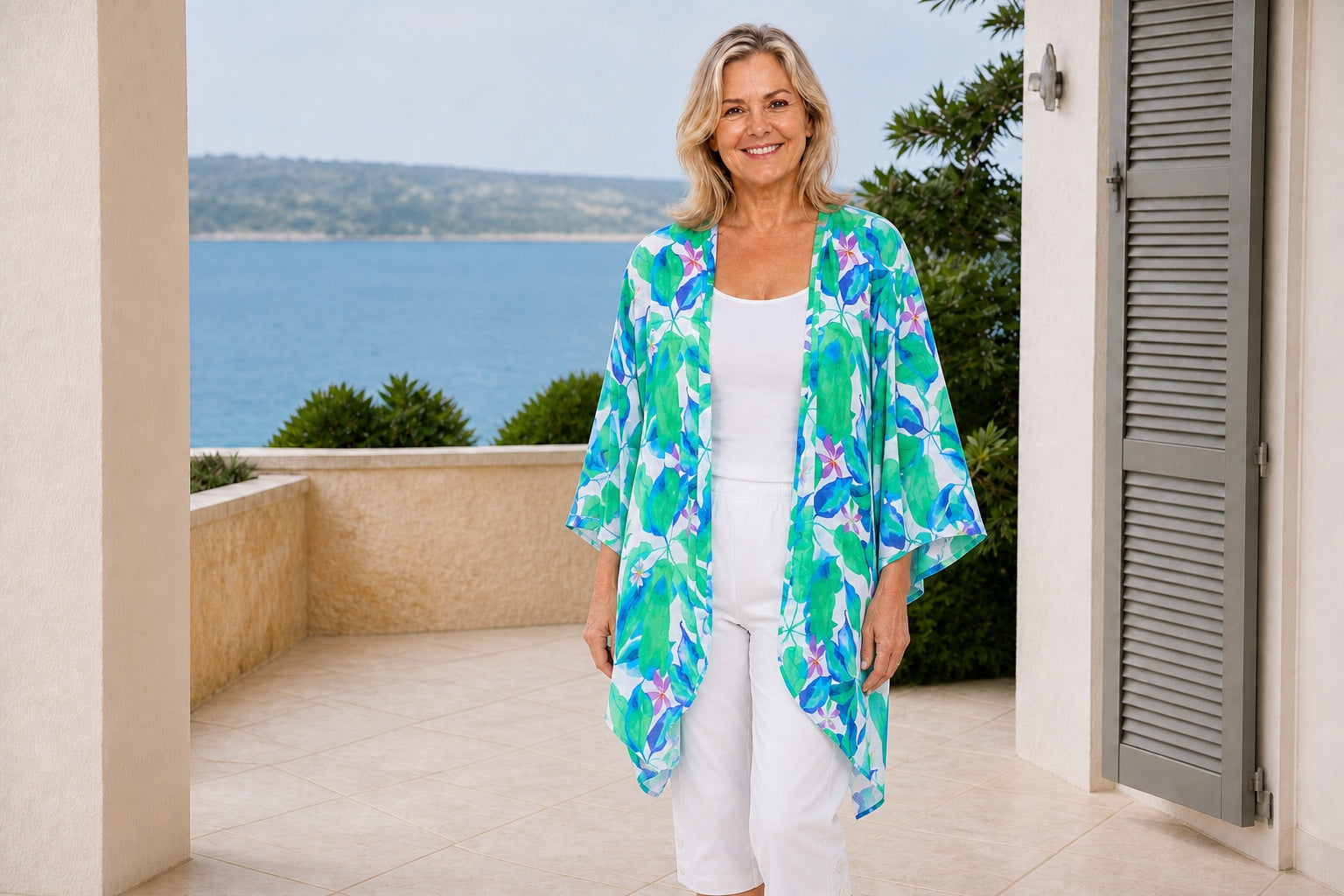
Modal still feels relaxed, but the added visual weight gives prints more saturation and the garment more presence. It pairs easily with a camisole and pants, and it can move into evening with jewellery and a dressier shoe.
Compare the two by occasion
- Beach or pool: chiffon offers the lightest, sheerest layer.
- Sightseeing or lunch: modal provides more coverage and a softer drape.
- Cruise packing: either can work; choose chiffon for resort use or modal for wider day-to-evening wear.
- Cool indoor spaces: modal generally feels more substantial, although neither replaces a warm jacket.
How the same print changes between fabrics
Colour appears different according to transparency and the layer beneath it. On chiffon, a print may look luminous and softly blended. On modal, similar colours can appear denser and more saturated. Product photographs should be viewed on the intended fabric rather than assuming one version will look exactly like another.
Movement changes too. Chiffon lifts and floats; modal falls closer to the body in fluid folds. Neither effect is inherently more flattering. Choose the one that matches your preferred level of coverage and the mood of the outfit.
Fit and care still matter
Check the measurements, front-panel length, sleeve shape and rounded hem on the exact product. A shared design language does not mean every piece has identical dimensions. Follow the care label, and protect both fabrics from snags and unnecessary heat.
If most of your use will be beside the water, begin with chiffon. If you want a layer for restaurants, travel and everyday dressing as well, modal may be the more versatile first choice. Explore all Claire Powell kimono cover-ups to compare current prints and fabrics.
Related reading: how to wash and store a chiffon kimono and how to wash and care for modal clothing.