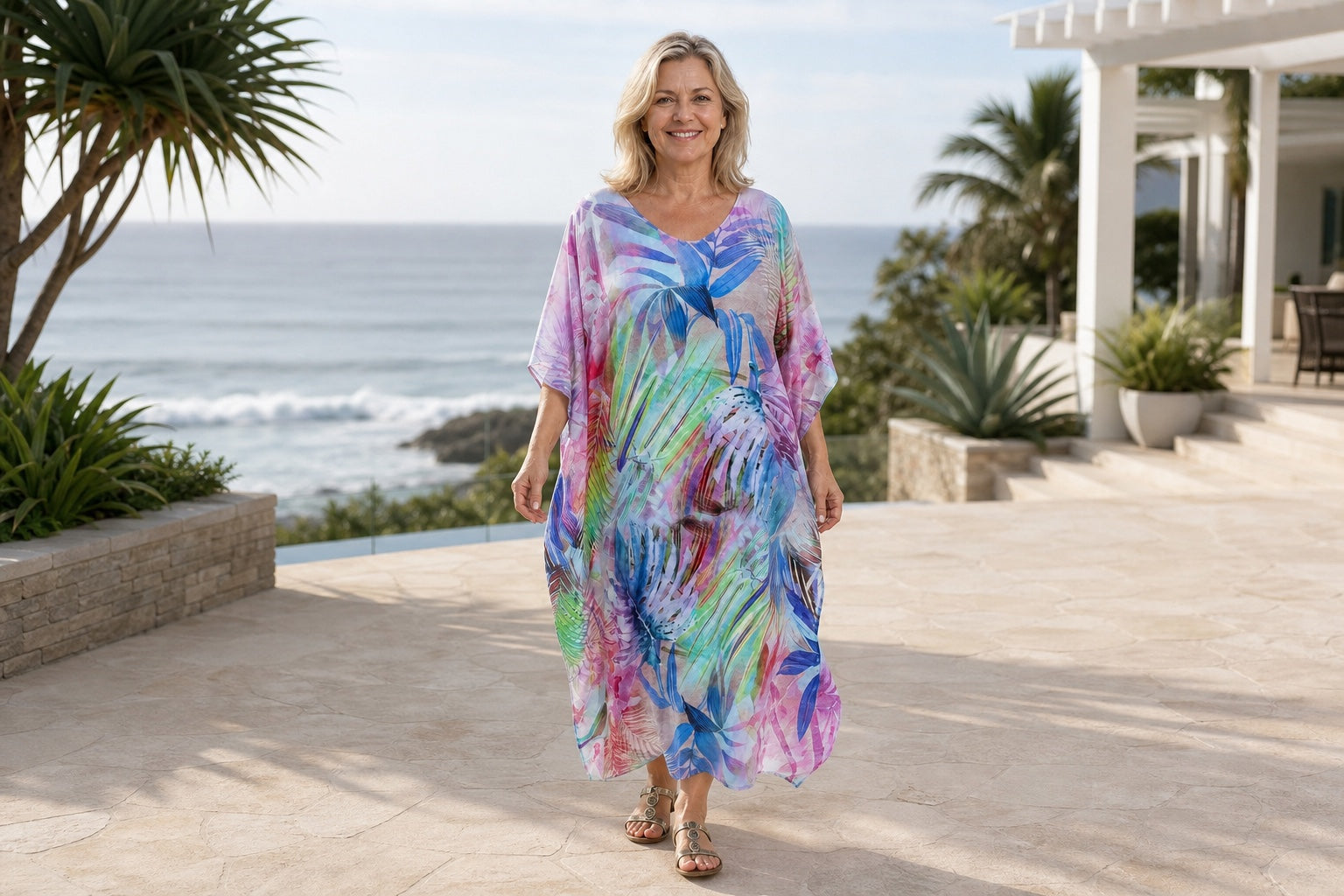
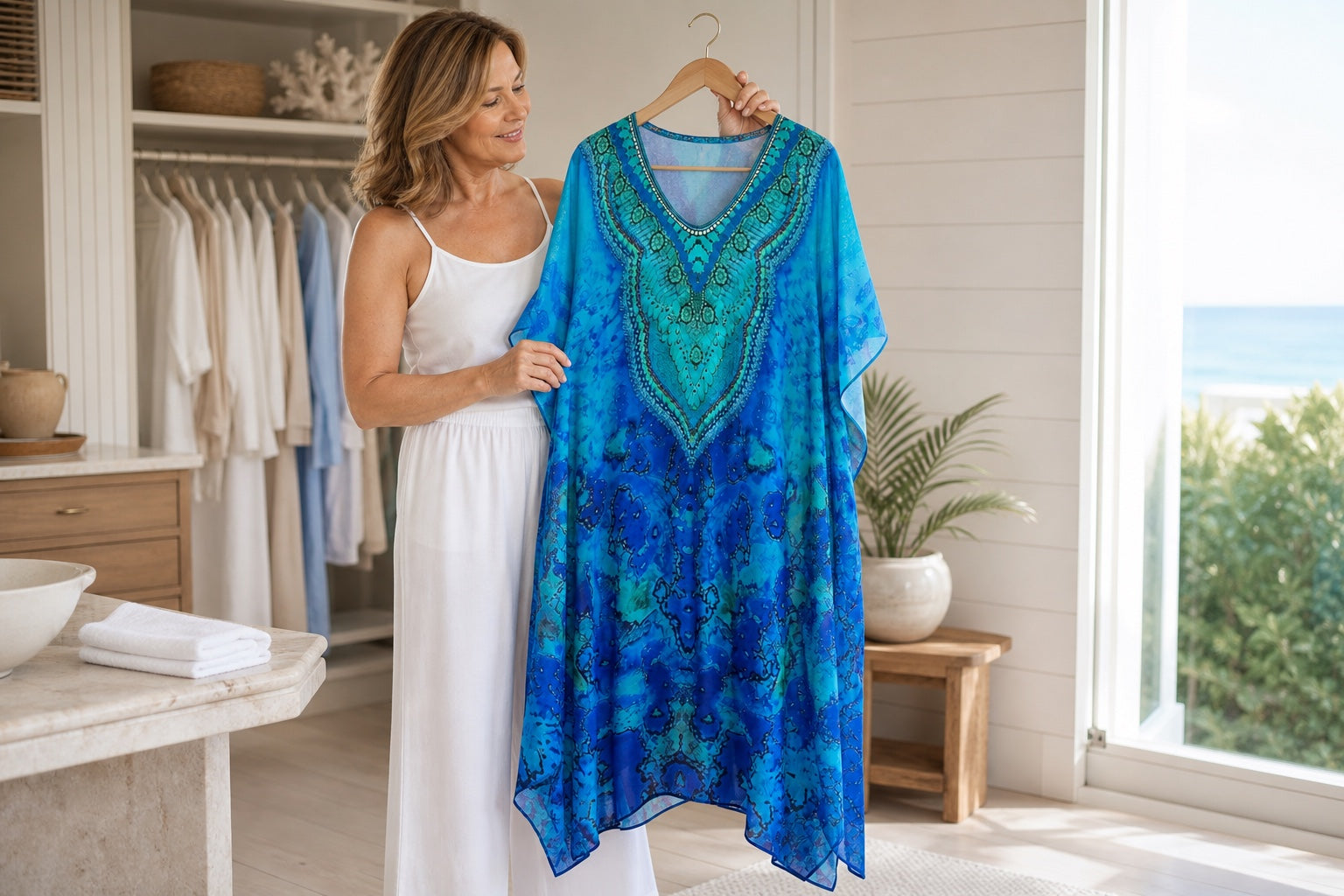
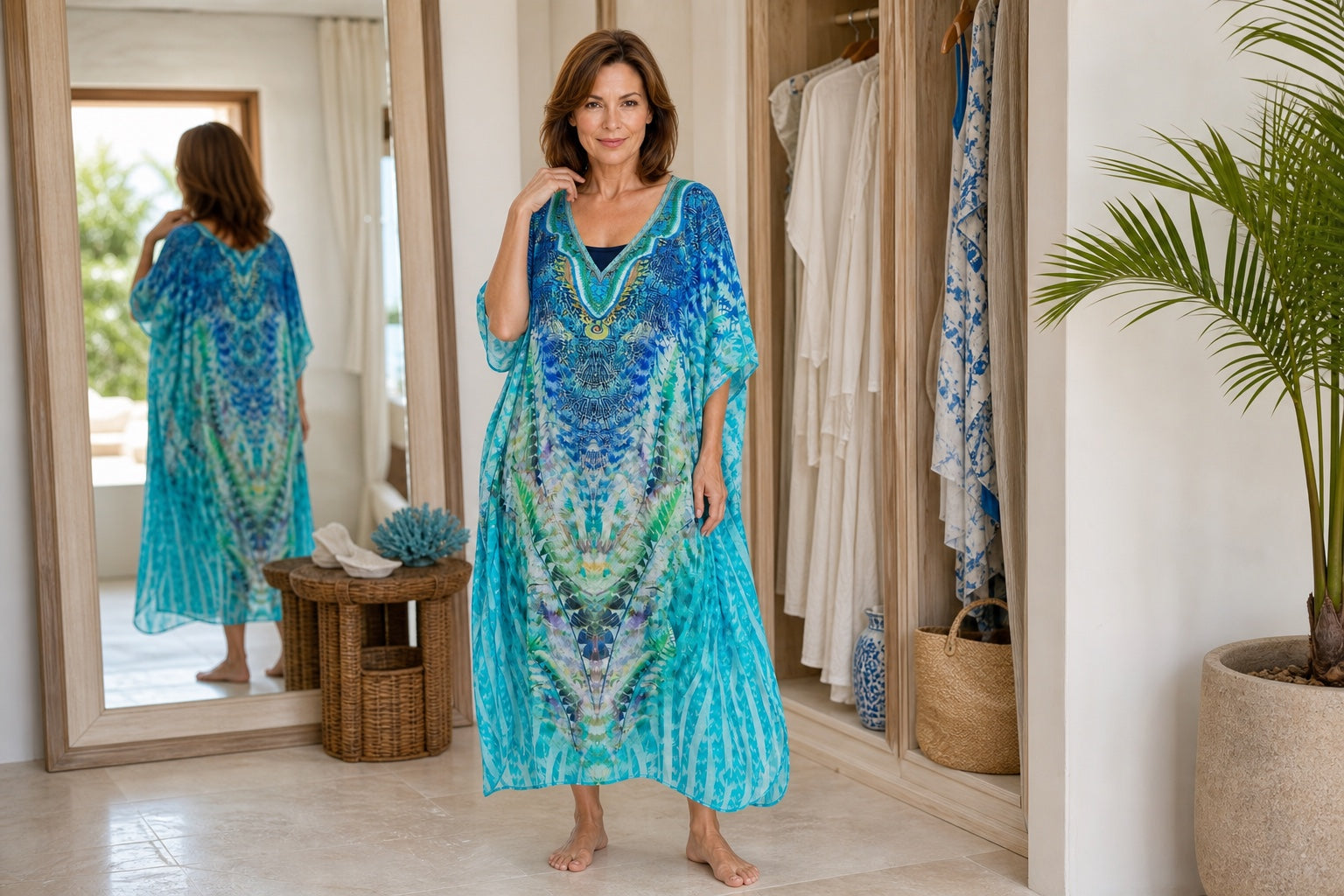
Fit Guide
Mini vs Midi Kaftans: How to Choose the Right Length
Compare mini kaftan tops and midi kaftan dresses by length, proportion, coverage and occasion so you can choose a shape that feels effortless.
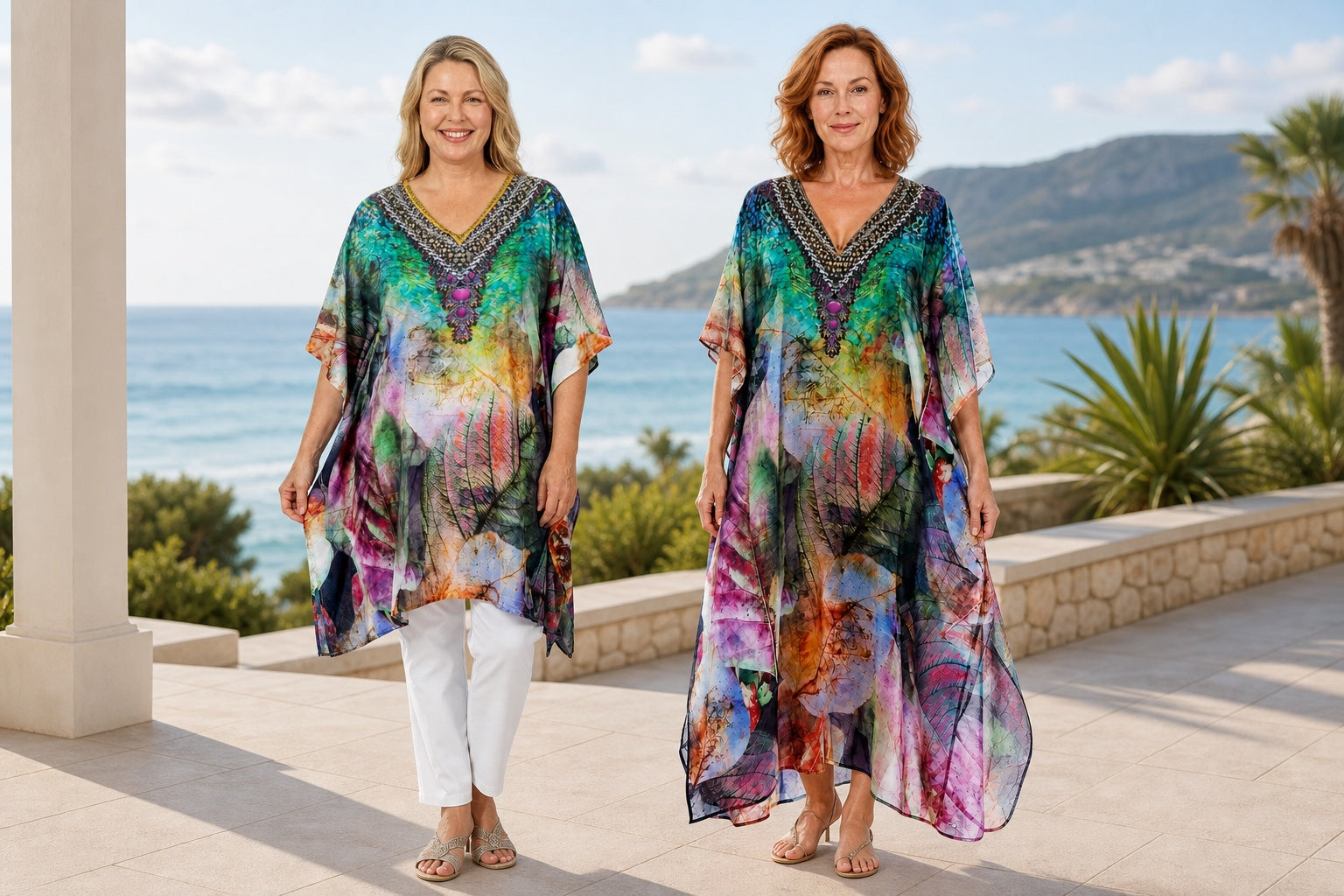
Kaftan length changes more than the amount of leg on show. It affects how the garment works with pants, how much coverage it gives, which shoes feel balanced and whether it reads as a relaxed top or a complete dress. The easiest choice is the length that fits the way you plan to wear it.
At Claire Powell, a mini kaftan is a generous hip-length style that can be worn as a top, a short beach cover-up or a relaxed mini dress. A midi kaftan dress falls much lower and is designed to work as a complete outfit. Both use fluid fabric and an easy silhouette, but they solve different wardrobe needs.
Choose a mini kaftan when you want styling flexibility
A mini kaftan works especially well over straight or softly wide-leg pants. The shorter hem keeps the ankle and lower leg visible, while the relaxed body skims the tummy and hips. It is also easy to pull over swimwear because it gives coverage without the length of a full dress.
If you are petite, a shorter kaftan can feel easier to proportion because more of the leg remains visible. The exact garment measurement matters more than the word ‘mini’, though. Compare the listed length with a top you already enjoy and consider where the lowest point of the hem will sit on your body.
The Heaven plus-size kaftan top, for example, has a relaxed curved hem and is designed to work over pants as well as over swimwear.
Choose a midi kaftan for an easy one-piece outfit
A midi kaftan dress gives more leg coverage and creates a long, uninterrupted line. It is useful for resort lunches, cruises, warm-weather events and days when you want to dress without coordinating separate pieces. The fabric should move around the body rather than gripping it.
On a shorter wearer, a midi kaftan may fall closer to the ankle. On a taller wearer, it may reveal more lower leg. Neither is wrong. Check the product length, measure from the shoulder on your own body and allow for the way a curved or handkerchief hem drops at the sides.
See the full-length shape of the Heaven kaftan dress or browse the kaftan dress collection.
Let the hem shape guide the proportion
A curved hem is not meant to sit in one rigid horizontal line. The centre, sides and back may finish at slightly different points, which gives the kaftan movement and prevents a wide garment from looking boxy. Look at the front, side and back photographs rather than judging length from one angle.
For a mini style worn with pants, a little ankle or lower leg showing keeps the outfit light. For a midi dress, a clear gap between the hem and shoe usually looks more intentional than a hem that pools around the foot.
Match the length to the occasion
For errands, a relaxed lunch or travel day, a mini kaftan with pull-on pants is practical and easy to repeat. For a pool or beach, either length can work: choose the mini for quick coverage and the midi when you want more sun or leg coverage while moving around the resort.
For dinner, a wedding or a special event, the longer line of a midi kaftan often feels more complete. Add a comfortable metallic sandal, simple earrings and a small bag rather than trying to create shape with a tight belt.
Use measurements, not height rules
There is no universal rule that petite women must wear short garments or tall women must wear long ones. Measure a favourite top and dress from the shoulder to the hem, compare those measurements with the product page and think about the shoes and underlayers you will use. If a kaftan has adjustable side seams, a tailor or experienced sewer may also be able to refine the width without changing its fluid character.
For more help with fit, read the plus-size kaftan guide. If your next question is what to put underneath, see what to wear under a kaftan.