dress guide
Summer Dresses for Mature Women: Why the Shift Dress Is Your Easiest Wardrobe Hero
A good summer dress should make warm-weather dressing simpler. For many mature women, a shift dress works because it offers a clear silhouette, comfortable movement and enough versatility for everyday plans, travel and casual occasions. The right one is not defined by age rules; it is defined by proportion, fabric and how confidently it fits your life.

A good summer dress should make warm-weather dressing simpler. For many mature women, a shift dress works because it offers a clear silhouette, comfortable movement and enough versatility for everyday plans, travel and casual occasions. The right one is not defined by age rules; it is defined by proportion, fabric and how confidently it fits your life.
Use measurements and multiple photographs to assess the actual garment rather than relying on the broad label “shift dress,” which can describe several variations.
Understand the shift silhouette
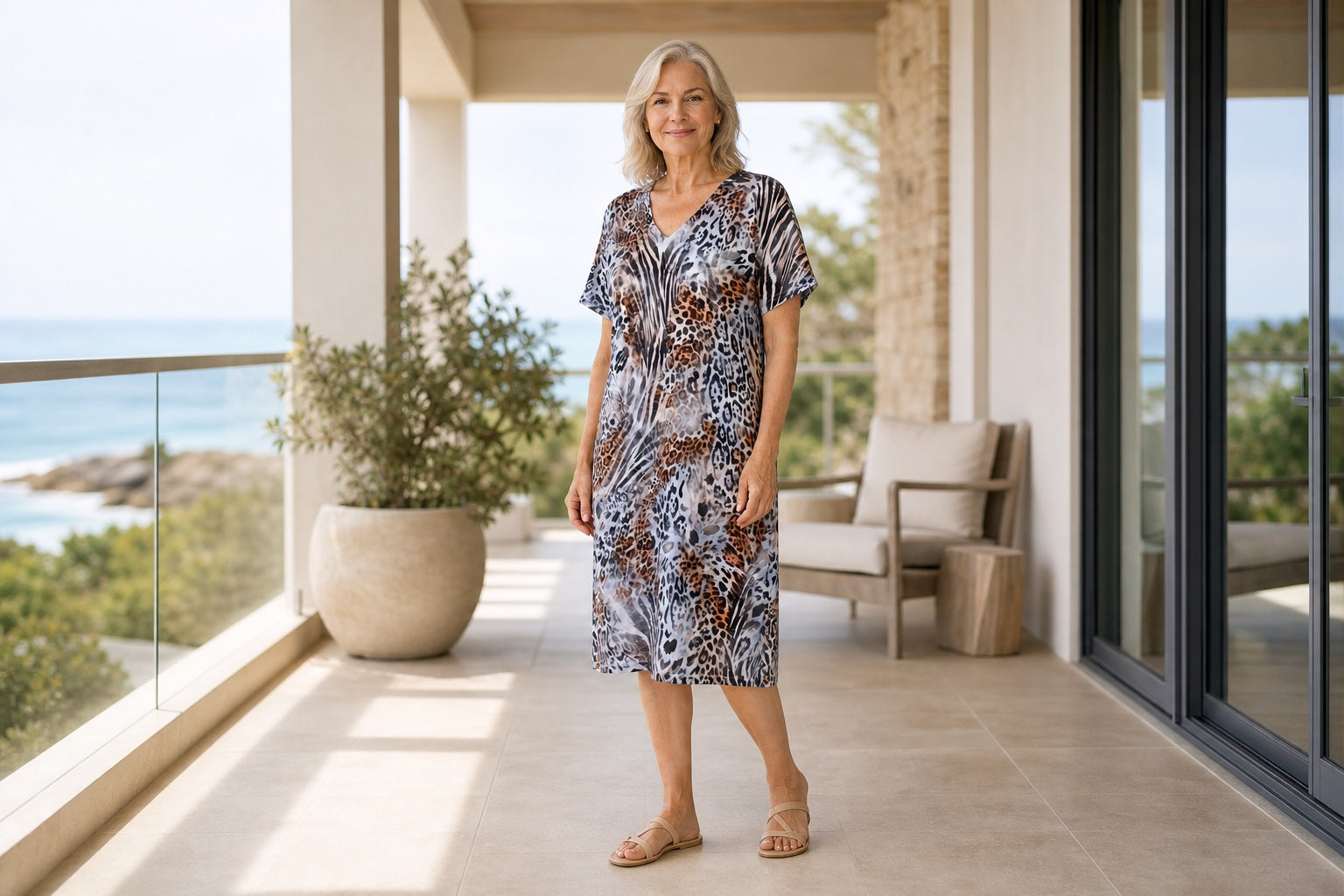
A shift dress generally falls from the shoulder with limited waist shaping. Some versions are straight, while others widen gently toward the hem or include darts for a little contour. That simplicity gives print and colour room to shine and allows the dress to sit away from the body in warm weather.
Relaxed does not mean oversized. The shoulder and neckline should remain stable, and there should be enough ease through the bust and hip for sitting and walking. Excess fabric can alter the intended line just as much as a fit that is too close.
Choose length and sleeve for your routine
Look at where the hem finishes on the model, then compare the garment length with a dress you own. Height, torso length and footwear all change the result. A knee or mid-calf hem may offer practical coverage, while a shorter style can feel light and casual.
Sleeves add sun and air-conditioning coverage, but their width and fabric influence comfort. A loose short sleeve allows movement; a longer sleeve can be useful for travel or events. There is no age-based requirement to cover the arms—choose according to comfort and purpose.
Prioritise fabric and construction
Light cotton can feel breathable and familiar, while other fibres or blends may provide more fluid drape or crease recovery. Weave, weight and lining are as important as fibre. Read the product details and check whether the dress requires a slip or is shown with one.
Pockets, side splits and darts add function and shape, but they should lie smoothly. Side and back photographs are valuable for understanding these features and the overall balance.
Style one dress several ways
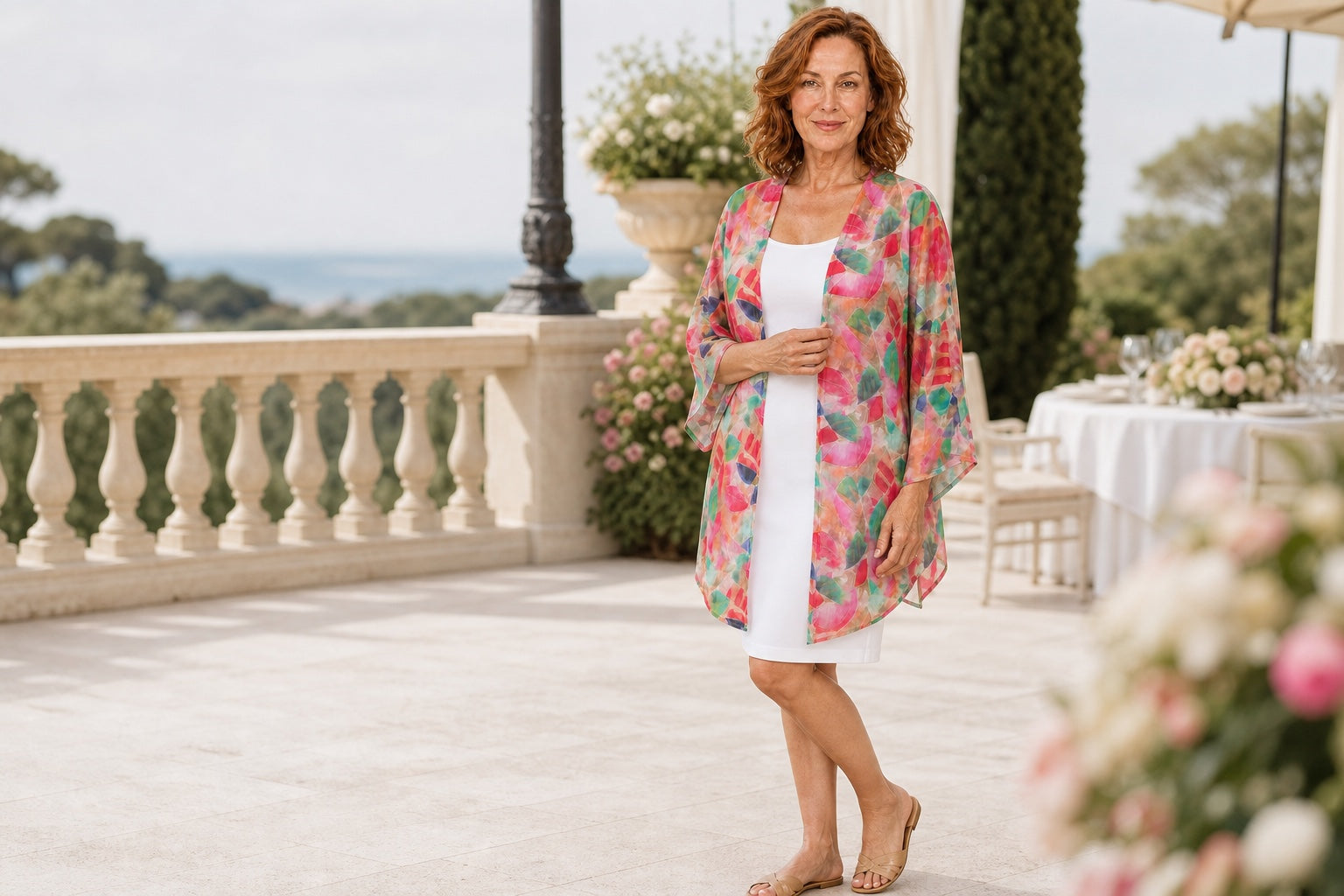
For daytime, add flat sandals and a practical bag. For lunch or an event, choose refined shoes, earrings and a light silk scarf. A kimono or shawl can add coverage in cooler conditions without changing the easy line of the dress.
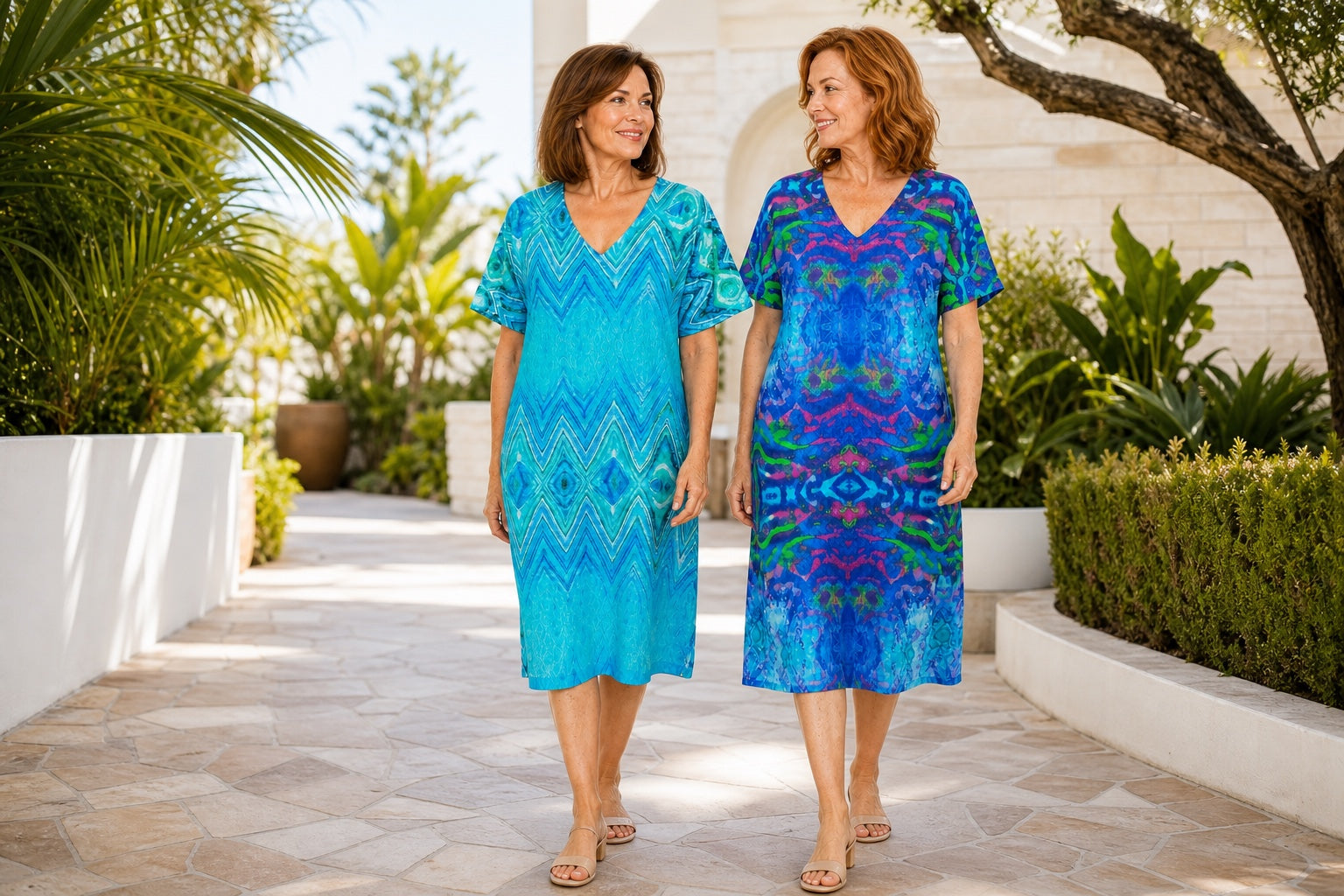
Let a colourful print be the focal point. Pull one shade into an accessory rather than matching every element. With a plain dress, use a printed scarf or statement jewellery to introduce personality.
Buy for repeat wear
Imagine the dress in at least three real settings and check that you already own suitable shoes and layers. Review care requirements and consider how it will pack if you travel. A dress that supports your actual calendar will be more valuable than one chosen for a single idealised occasion.
Explore the Claire Powell summer shift dress collection for colourful, easy silhouettes designed to make dressing feel uncomplicated.
Related reading: what to wear over a sleeveless dress and the best fabrics for hot and humid weather.