accessories
Silk Scarf Buying Guide: What to Look for in Fabric, Drape and Size
A beautiful silk scarf should do more than look appealing in a single photograph. It should feel comfortable, suit the way you dress and offer enough styling possibilities to justify its place in your wardrobe. When buying online, the most useful clues are fibre information, dimensions, finishing, print scale and clear product imagery.

A beautiful silk scarf should do more than look appealing in a single photograph. It should feel comfortable, suit the way you dress and offer enough styling possibilities to justify its place in your wardrobe. When buying online, the most useful clues are fibre information, dimensions, finishing, print scale and clear product imagery.
This guide will help you compare scarves with confidence while avoiding vague assumptions about quality or fit.
Confirm the fibre and construction
Read the product description carefully and distinguish silk from silk blends or silk-like fabrics. Each can have merit, but they will not necessarily feel, drape or require care in the same way. Look for a clear material statement and follow the care instructions for that particular composition.
Examine close photographs of the weave and edges. A neatly finished hem should run consistently around the scarf, while the surface should appear even unless texture is an intentional design feature. Product imagery should show enough detail to understand the finish without relying on overly smoothed or colour-shifted editing.
Use dimensions to predict how it will wear
Measurements matter more than category names such as small or large. A compact square is ideal for a neat neck tie or handbag accent. A medium square gives more room for triangles and head wraps. A generous square or rectangle can cover the shoulders and function as a light evening layer.
Compare the listed dimensions with a scarf you already own, or mark them out with a tape measure. This simple check helps you understand how much fabric will sit at the neck and whether the ends will be long enough for your preferred knot.
Choose a print that works with your wardrobe
Begin with the colours you wear most often. A scarf does not need to match them exactly, but one connecting shade makes styling easier. A multicoloured design can refresh several neutrals, while a tonal print offers a quieter finish. Consider scale as well: broad motifs read clearly when draped, whereas very fine patterns create a more detailed effect.
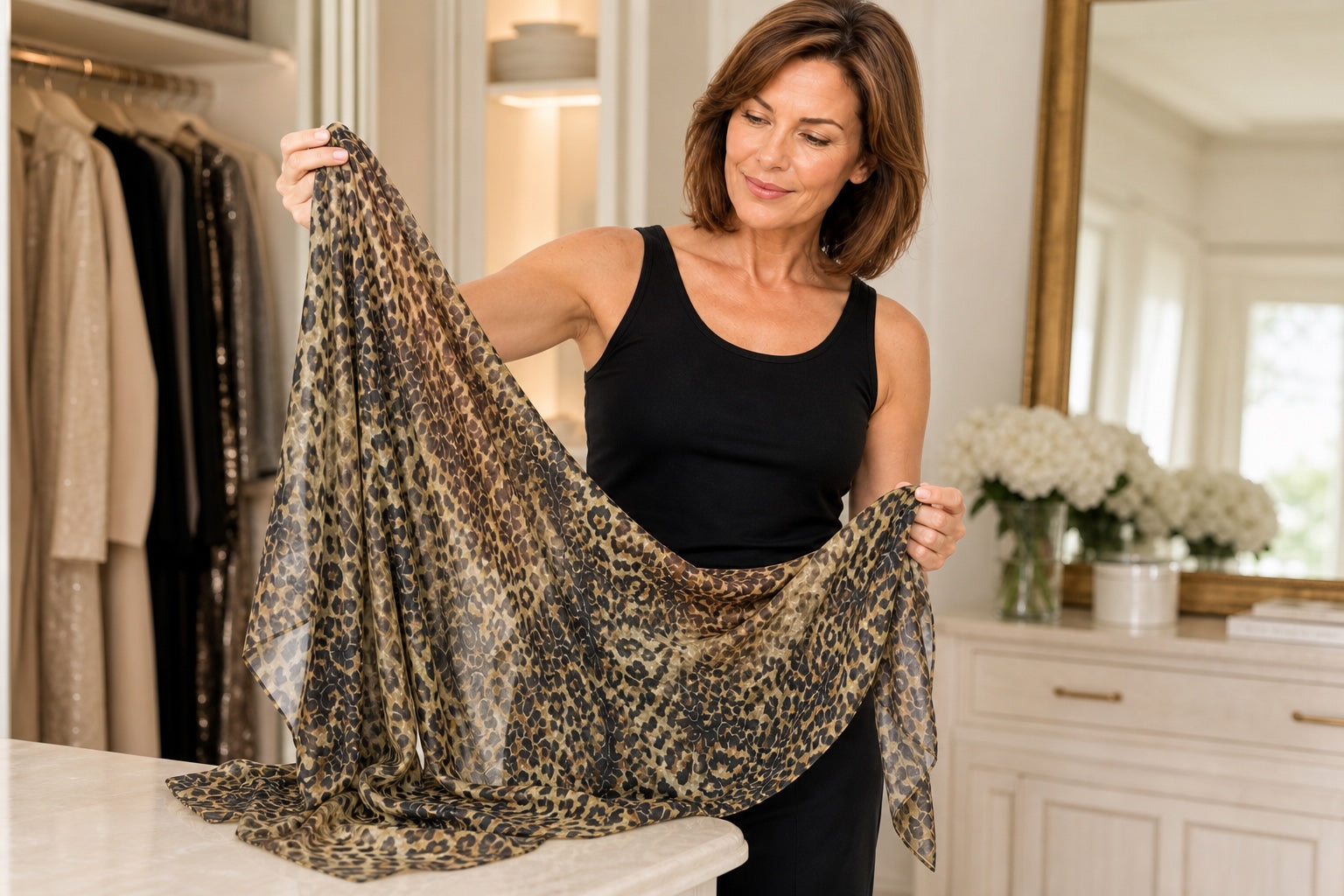
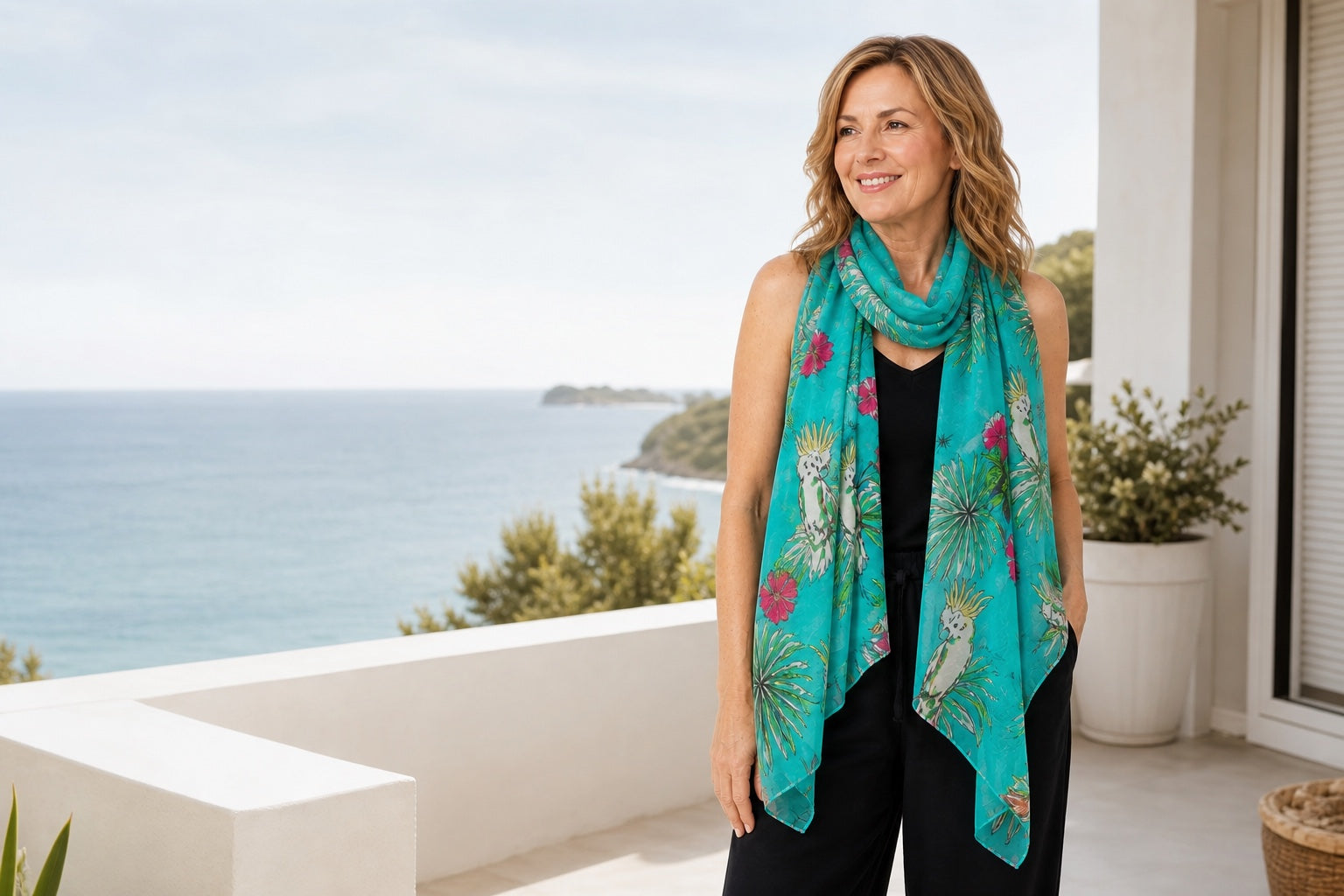
View every available image. A flat view explains the complete composition; a model image shows how the print changes when folded; a detail view reveals colour and texture. Remember that screens vary, so small differences between the display and the physical scarf are possible.
Consider comfort, care and purpose
Decide whether the scarf will be worn mainly at the neck, over the shoulders, in the hair or as a travel accessory. A fine, smooth fabric feels different from a heavier weave, and each creates a different amount of volume. Care requirements should also fit your routine, particularly if the scarf will travel frequently.
If you wear rings, brooches or textured bags, check them for rough edges before they touch the scarf. Good ownership starts before the first stain: careful handling will help preserve the surface and hem.
Make a considered final choice
A useful scarf should work with at least three outfits you already own. Imagine it with a plain top and pants, a summer dress and a light jacket. If it adds something distinct to all three, it is likely to become more than an occasional accessory.
Browse Claire Powell silk scarves and use the product details, dimensions and multiple photographs to compare designs before choosing.
Related reading: the silk, silk-wool and wool scarf comparison and how to mix bright prints and colour after 50.