fit guide
Classic vs A-Line Tunic Shirts: Which Shape Suits You Best?
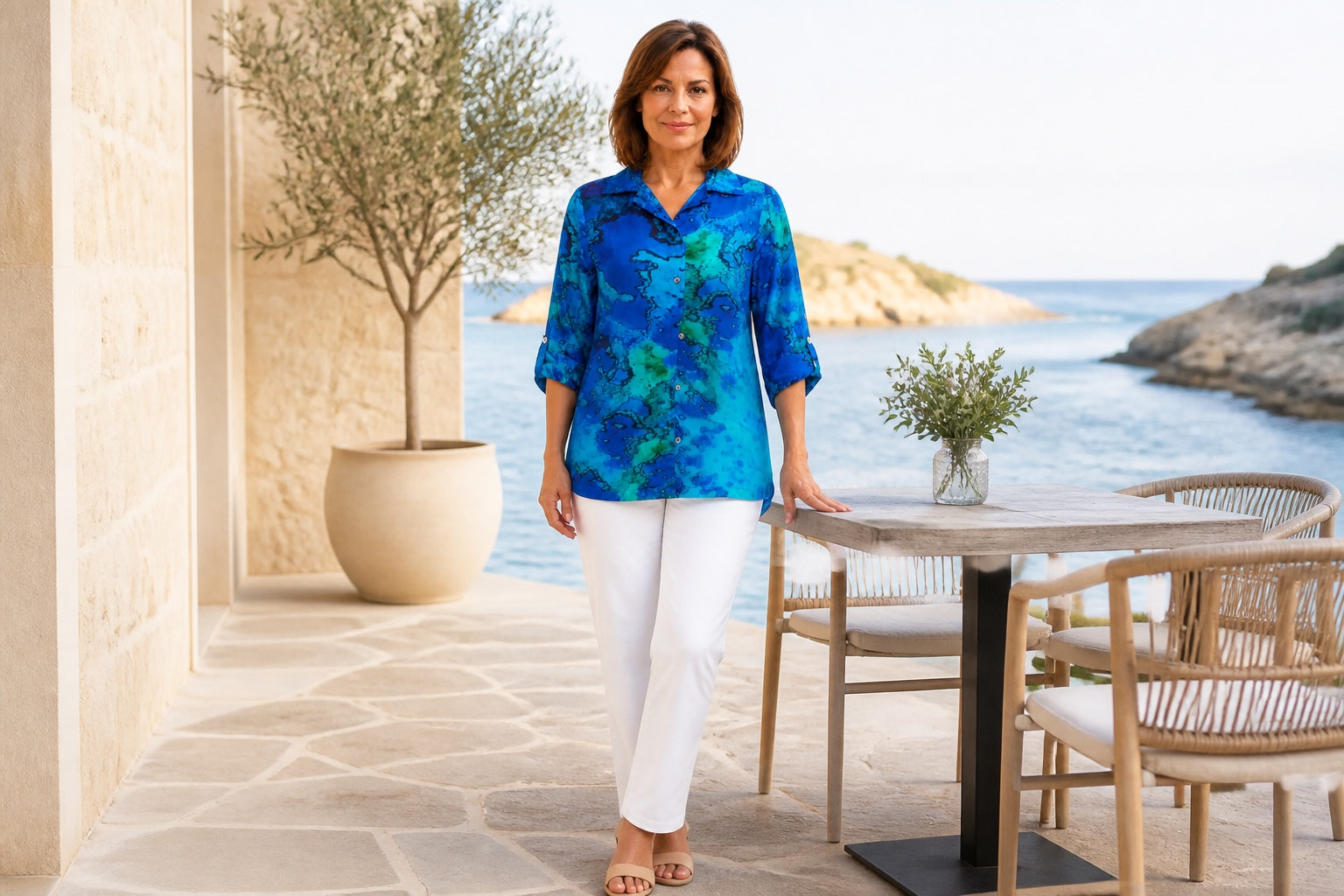
A classic button-up shirt and an A-line tunic can be made from similar fabric and share familiar details, yet they create very different proportions. The classic shape is straighter and more tailored; the A-line begins closer to the body through the shoulders and opens gradually toward the hem.

A classic button-up shirt and an A-line tunic can be made from similar fabric and share familiar details, yet they create very different proportions. The classic shape is straighter and more tailored; the A-line begins closer to the body through the shoulders and opens gradually toward the hem.
Neither style is universally more flattering. The right choice depends on how you like clothing to sit through the waist and hips, whether you tuck your shirts and how much length or coverage you want.
The classic button-up: clean and versatile
A classic shirt follows a straighter line from underarm to hem. It can be worn buttoned, partially tucked or open over a camisole, which makes it useful for work, travel and layering. The structure around the placket and collar area gives a polished frame to soft printed fabric.
Choose this shape if you like a neater silhouette, wear shirts under jackets or regularly tuck the front into pants. Check that the buttons lie flat through the bust and that the hem does not pull when you sit.
The A-line tunic: room through the lower body
An A-line tunic widens gently toward the hem, creating more space through the waist, tummy and hips. The extra length often provides comfortable coverage over straight pants or leggings, while the fitted shoulder area keeps the garment from feeling shapeless.
Choose this style if you prefer not to tuck, want more movement through the hips or enjoy a longer top. A curved or handkerchief-style hem can add flow, but it should remain balanced from the front and back.
Compare fit at four points
- Shoulders: the seam or drop should look deliberate and allow arm movement.
- Bust: buttons should stay flat and the neckline should sit securely.
- Hips: a classic shirt should skim; an A-line should open without excessive bulk.
- Length: check the measurement against the pants and shoes you plan to wear.
Use a shirt you own as a reference. Measuring a familiar garment laid flat is often more helpful than comparing your body measurement with a generic size chart.
How to style each shape
Wear a classic button-up with straight or wide-leg pants, using a full or partial tuck when you want waist definition. Leave it open over a camisole for a light jacket effect. An A-line tunic works well untucked with straight or gently tapered pants so the longer hem remains visible.
With either style, let a colourful print be the focal point. Choose simple shoes and repeat one shade from the shirt in your accessories rather than matching the entire palette.
Choose for your wardrobe, not a rule
If you like both effects, use them for different jobs: a classic shirt for layering and sharper outfits, an A-line tunic for relaxed days and extra movement. Browse the Claire Powell shirt and tunic collection and compare the exact measurements and product views of each cut.
Related reading: the pull-on pants fit guide and how to style loose tops without losing shape.